
Open shelving is the highest-risk, highest-reward storage in the kitchen: styled well it makes the whole room feel light and lived-in, left unmanaged it puts every mismatched mug on permanent display. The difference is not discipline — it is three rules that make tidy the default state.
Why it works
The 80/20 rule works because daily-use items are self-tidying: plates and glasses you use every day rotate through the dishwasher and return in neat stacks. It is the decorative never-used layer that sits still long enough to collect grease, dust and visual noise.
One category per shelf turns tidying into pattern-matching. When the shelf's job is 'white plates', anything else on it is instantly, visibly wrong — you correct it without thinking. Mixed shelves have no wrong, so they drift.
A restrained palette does the heavy lifting from a distance. Two or three repeating colors read as a designed composition even when the shelf is genuinely just storage, which is why decanting into matching jars transforms a pantry shelf more than any amount of straightening.
How to do it
Step 1
Empty the shelves completely and sort contents into three piles: used weekly, used rarely, purely decorative.
Step 2
Return only the weekly pile plus two or three favorite decorative pieces — roughly 80 percent working storage, 20 percent display.
Step 3
Assign each shelf one category: everyday plates and bowls, glasses and mugs, cookbooks and jars. Heaviest items on the lowest shelf.
Step 4
Decant dry goods (pasta, rice, oats, coffee) into matching glass jars with simple labels; recycle the branded packaging immediately.
Step 5
Move everything rare-use, plastic or off-palette into closed cabinets below — open shelves earn their place with daily items only.
Step 6
Stack vertically, not deep: one column of plates per stack, glasses two rows deep at most, so nothing hides behind anything.
Step 7
Set a monthly two-minute wipe-down; grease film, not clutter, is what makes established open kitchens feel grubby.
Keep organizing
- Zone Your Kitchen: The 5-Zone Storage System
- The Kitchen Counter Reset
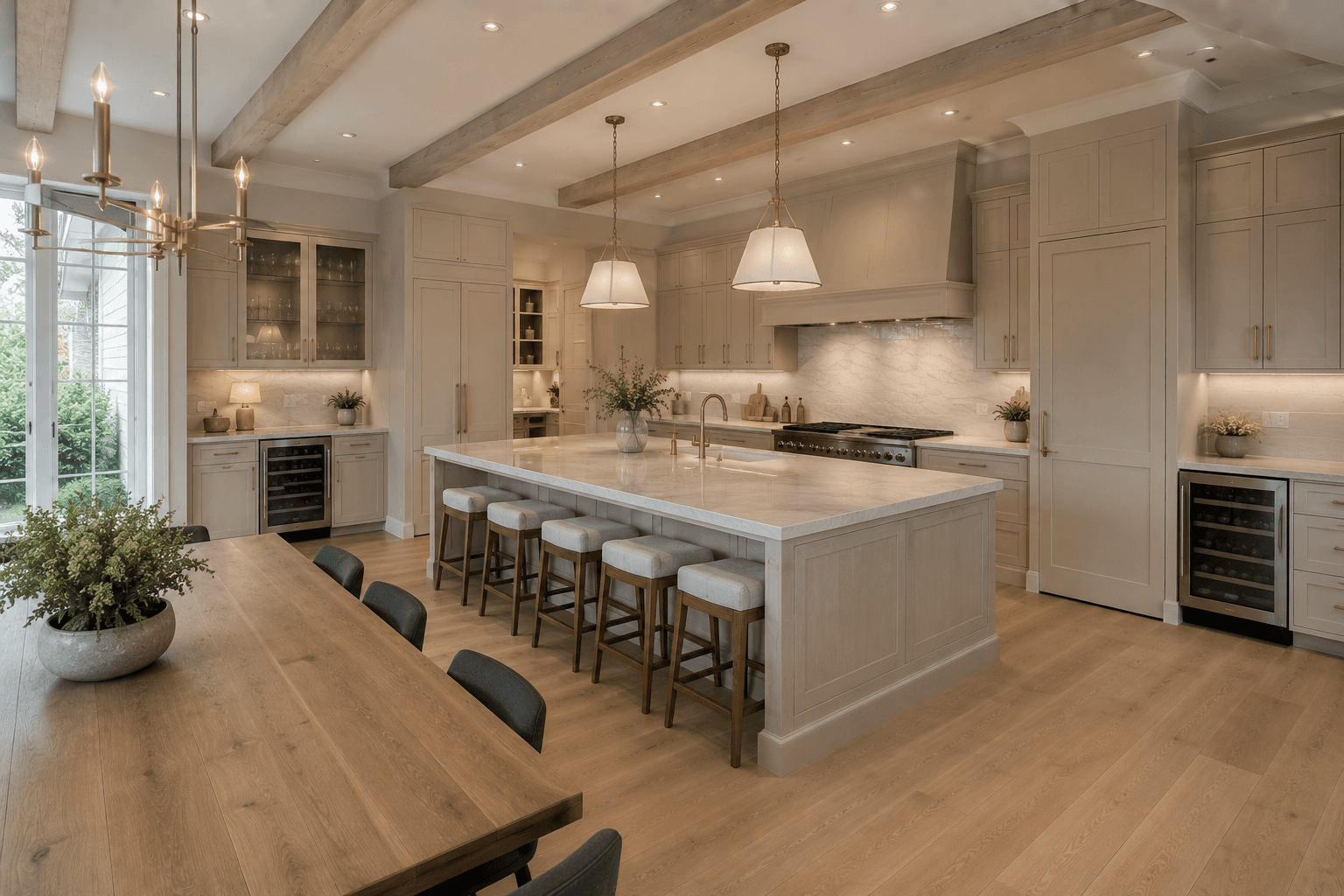
- The cream classic kitchen pictured here
Hand-picked guides and room designs that pair well with this project.
Frequently AskedQuestions
Anything plastic, branded, rarely used, or in more than three colors. Rare-use items collect grease and dust on display; branded packaging and color chaos are what make shelves read messy even when ordered.
Yes, especially within two meters of the hob — airborne grease settles as a film. Keep shelves away from the cooking zone where possible, favor daily-rotation items that wash themselves through use, and wipe shelves monthly.
You mostly can't — repetition is what makes open storage look intentional. Keep one cohesive set out on display and move the mismatched pieces behind closed doors below.
Very — they visually push walls back because your eye reads to the wall plane, and they put daily items one reach away. Just hold the 80/20 line harder: in a small kitchen every messy shelf is close enough to dominate the room.
Get the look
Room Designsto Steal

Join the conversation
Share your thoughts on this room.