
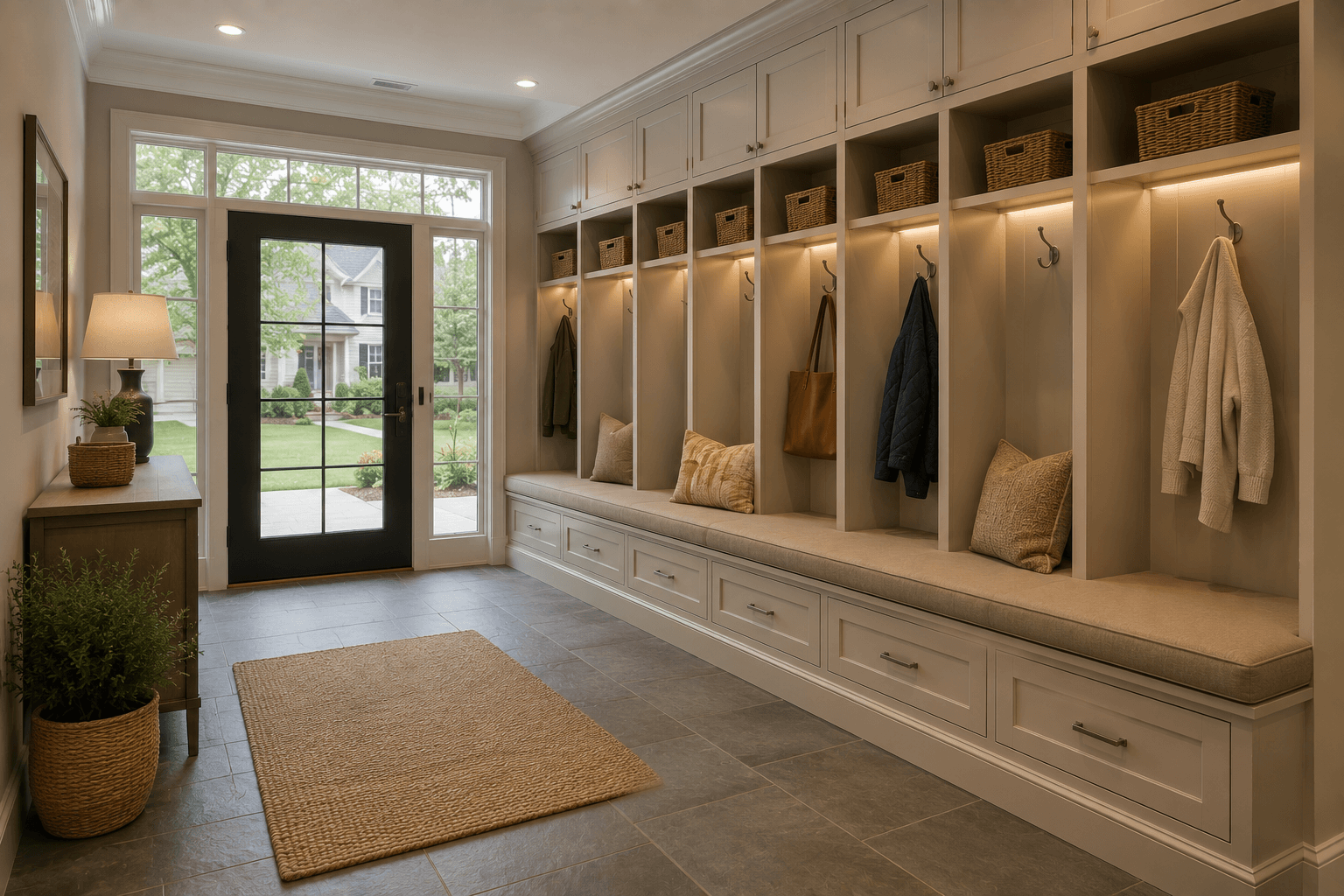
Almost everything that clutters a home walks in through one door: coats, bags, shoes, mail, keys, sports kit. A drop zone is the two meters of storage that catches that daily flood before it scatters — and it works whether you have a true mudroom or just a stretch of hallway wall.
Why it works
Clutter scatters because arriving is a hands-full, low-willpower moment: whatever surface is nearest wins. A drop zone succeeds by being the nearest surface — designed catchment in the first two meters beats discipline everywhere else in the house.
Per-person lockers are the difference between a system and a shelf. Shared storage at the door fails because nobody owns the overflow; a labelled locker per person makes every stray item's owner instantly visible, which is most of the enforcement you will ever need.
The bench earns its place through sequencing: people sit to deal with shoes, and while seated they are stationary long enough to hang the coat and drop the bag in the right place. Standing changeovers are when things get flung.
How to do it
Step 1
Map the flood: for three days, note everything that crosses the threshold and where it lands. That list is your storage specification.
Step 2
Assign one locker, cubby or hook-and-shelf column per household member, labelled for children — territory first, hardware second.
Step 3
Mount hooks at two heights: adult shoulder height, and child-reachable height for every child old enough to hang a coat.
Step 4
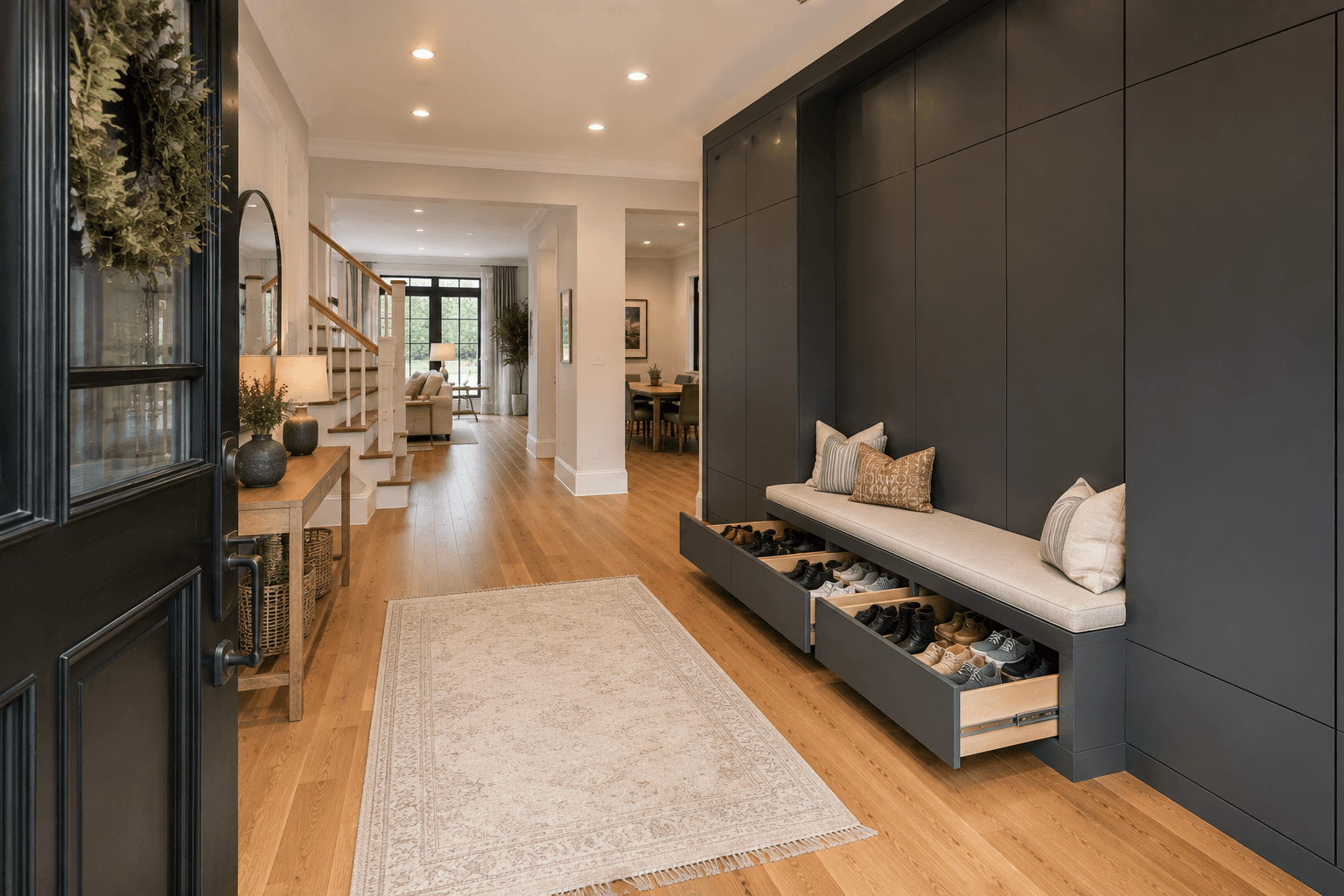
Add a bench with baskets or drawers beneath for shoes-in-rotation; keep one basket per person, not a communal pile.
Step 5
Fix a tray or wall pocket for mail and keys at adult eye level, with a bin within reach for instant junk-mail triage.
Step 6
Declare the boundary rule: nothing that lives in the drop zone travels deeper into the house — coats, bags and shoes stop here.
Step 7
Run a Sunday five-minute reset: empty strays from lockers, clear the mail pocket, return migrated items to their owners' zones.
Keep organizing
- Entryway Shoe Storage for Narrow Halls
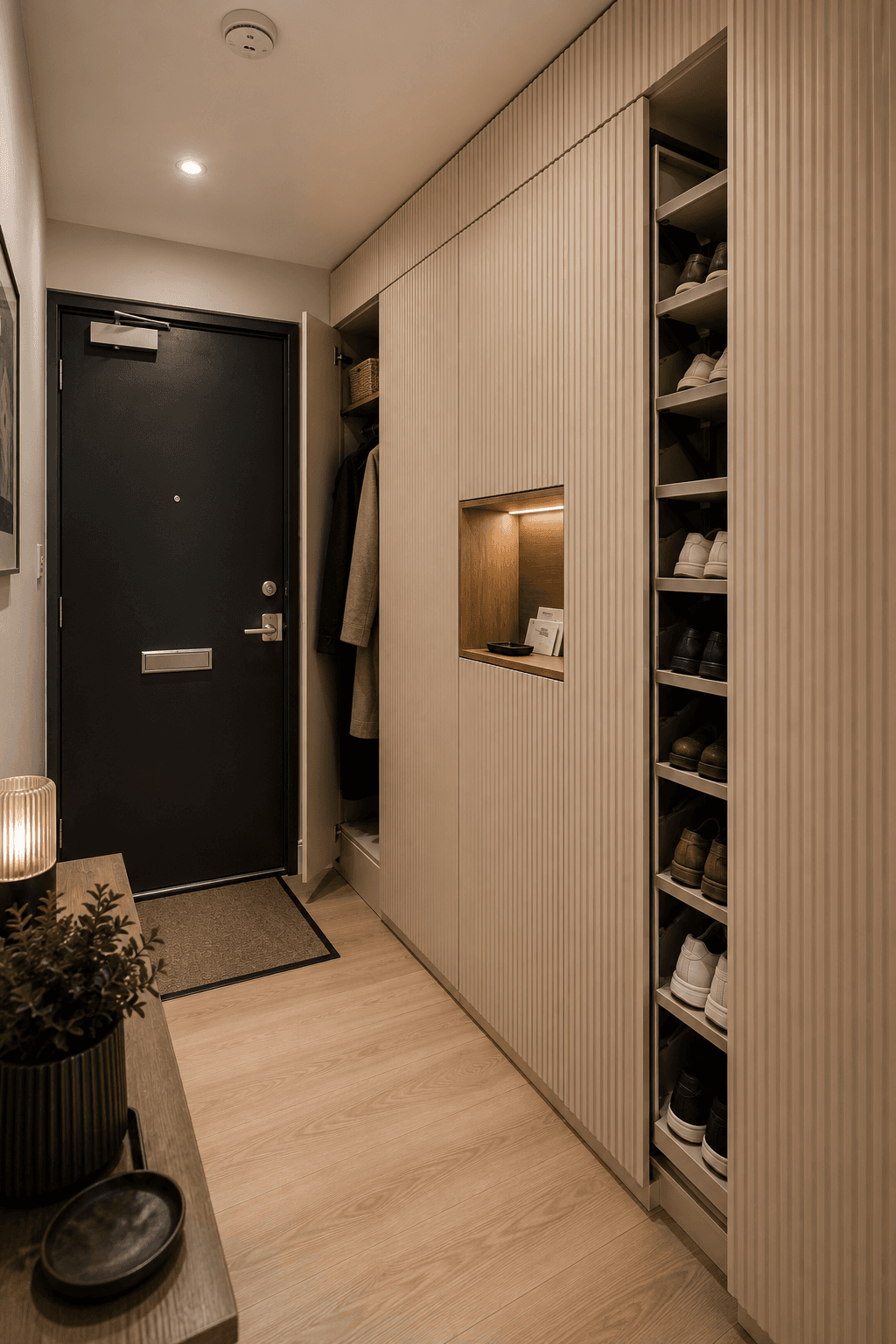
- Hidden Wardrobe Walls: Closed Storage for Busy Rooms
- The cream mudroom lockers pictured here
Hand-picked guides and room designs that pair well with this project.
Frequently AskedQuestions
Four elements: hooks at adult and child height, a bench with storage underneath, a tray or wall pocket for mail and keys, and per-person lockers or cubbies. Together they catch everything that enters daily.
Claim two meters of wall inside the door: a hook rail, a slim bench with baskets beneath, and a shelf with a tray above. It is the system, not the room, that does the work.
Give each child their own labelled locker or hook column mounted at their height. Ownership plus reachability beats reminders — shared storage at adult height is why the floor wins.
Into a wall pocket or tray in the drop zone, sorted weekly with the bin beside you. Mail piles form wherever mail first lands — move the landing spot and the kitchen counter clears itself.
Get the look
Room Designsto Steal

Join the conversation
Share your thoughts on this room.